
Six months after the United States and Israel launched coordinated strikes against Iran, the war has settled into a grinding stalemate with no clear resolution in sight. At the centre of Iran’s battered leadership stands a man who has neither been seen in public nor heard from until this week — a supreme leader thrust into power by death and himself wounded in the very attack that killed his father.
Mojtaba Khamenei, 56, was named Iran’s new supreme leader on March 8, 2026, by the Assembly of Experts, a body of 88 Shia clerics, just over a week after his father, Ayatollah Ali Khamenei, was killed in the opening wave of U.S.-Israeli strikes on February 28. The 86-year-old ayatollah, who had led the Islamic Republic for 37 years, was killed when the sprawling presidential complex in central Tehran was levelled. The attack also killed six members of the Khamenei family, including Mojtaba’s wife Zahra, his mother Mansoure Khojasteh, and his teenage son Mohammad Bagher .
A Wounded Leader, a Silent Figure
Mojtaba Khamenei is believed to have been injured in those same February strikes. Iran’s ambassador to Cyprus, Alireza Salarian, confirmed in an interview that the new supreme leader was hurt in the attack that levelled his father’s residence, saying he was “lucky to survive.” An Iranian official told Reuters that Khamenei was “lightly injured but active,” while Iranian state television described him as “war wounded” . U.S. Secretary of Defense Pete Hegseth went further, claiming at a Pentagon news conference that Khamenei “is wounded and likely disfigured” .
Since his appointment, Khamenei had not spoken, been seen, or issued any public statement — an extraordinary silence for the leader of a nation at war. That changed this week, when he issued his first public statement since taking over as supreme leader. The break in silence comes as the war crosses the six-month mark with no end in sight.
A War With No Exit
The conflict that began on February 28 has become the most ambitious attack on Iranian targets in decades. The U.S. military has said it struck more than 15,000 Iranian targets, including over 50 Iranian vessels, air defence systems, ballistic missile sites, and military communications networks . At least 1,444 people have been killed and 18,551 injured in the U.S.-Israeli attacks, according to the latest figures.
Iran has retaliated by launching hundreds of missiles and drones at Israel and neighbouring Gulf Arab states that host U.S. military bases. The Islamic Revolutionary Guard Corps (IRGC), which has close ties to the new supreme leader, pledged allegiance to Mojtaba Khamenei and declared itself ready to continue the fight.
The Strait of Hormuz Chokepoint
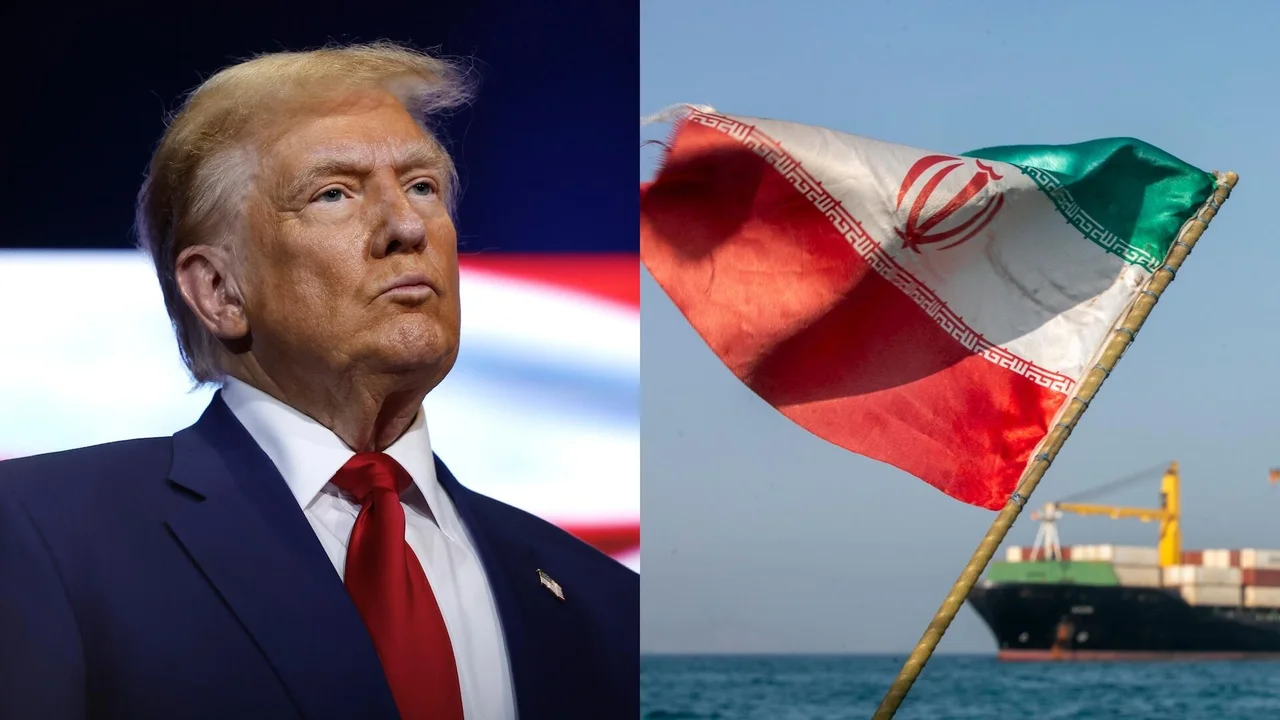
A central front in the war is the Strait of Hormuz, which Iran closed at the start of the conflict. Iran has vowed to keep the strait shut to shipping traffic unless the U.S. returns to a temporary deal the two sides struck earlier in the summer. President Donald Trump insists the strait is open and under U.S. blockade enforcement, though ships have been hesitant to sail through the vital waterway .
At least 19 mariners have been killed in the maritime confrontation, and U.S. Central Command has reported several ships redirected due to the blockade. The dispute over the strait has drawn in regional mediators, with Iranian Foreign Minister Abbas Araghchi meeting his Qatari counterpart in Tehran to discuss the waterway, following intense talks with Oman and Pakistan.
Sanctions and Resistance
As the war drags on, Iran’s economy is buckling under ever-tightening U.S. sanctions. Iranian President Masoud Pezeshkian, speaking to state television, addressed the toll: “Some say sanctions have no effect at all; to the people, I really don’t know what to say.” He added: “We are in a war situation, and we must endure these wartime conditions” .
The Iranian cabinet framed the resistance in defiant terms, stating that the Islamic Republic would act “with expediency” against “the conspiracies and unjust sanctions of the American-Zionist arrogance.” Trump, for his part, said his administration is “not looking to meet” with Iran, arguing that the naval blockade on Iranian ports and the sanctions have inflicted severe damage on the country.
A Leader in the Crosshairs
Mojtaba Khamenei’s rise was cited by Trump as a worst-case scenario. The U.S. president declared the appointment “unacceptable” and warned that the new leader “is not going to last long” without his approval. Israel has been more explicit: Defence Minister Israel Katz called any newly appointed supreme leader “an unequivocal target for elimination, no matter his name or where he hides.”
Despite the threats, Iran’s theocracy has delivered what analysts describe as a clear message of continuity — choosing a hardline cleric with deep ties to the Revolutionary Guard to replace the man the U.S. and Israel spent decades trying to neutralise. The younger Khamenei is widely seen as at least as hardline as his father, who held the post for 37 years after the Islamic Revolution .
Now, as his first public statement reaches a war-weary nation, the question hanging over the conflict is whether Iran’s wounded, silent-then-suddenly-vocal new leader represents continuity, desperation, or a new phase in a war that shows no sign of ending. Six months in, the strikes that killed his father and injured him have produced a supreme leader who, until this week, the world had neither seen nor heard — and a war that neither side appears able to win.
Sources:
- The Guardian, “Mojtaba Khamenei was hurt in strike that killed his father, Iran’s Cyprus ambassador confirms,” 11 March 2026.
- Reuters, “Iran’s new supreme leader ‘lightly injured’ but active, Iranian official says,” 11 March 2026.
- CBS News, “Iran vows to resist U.S. sanctions as war passes 6-month mark,” 2026.