
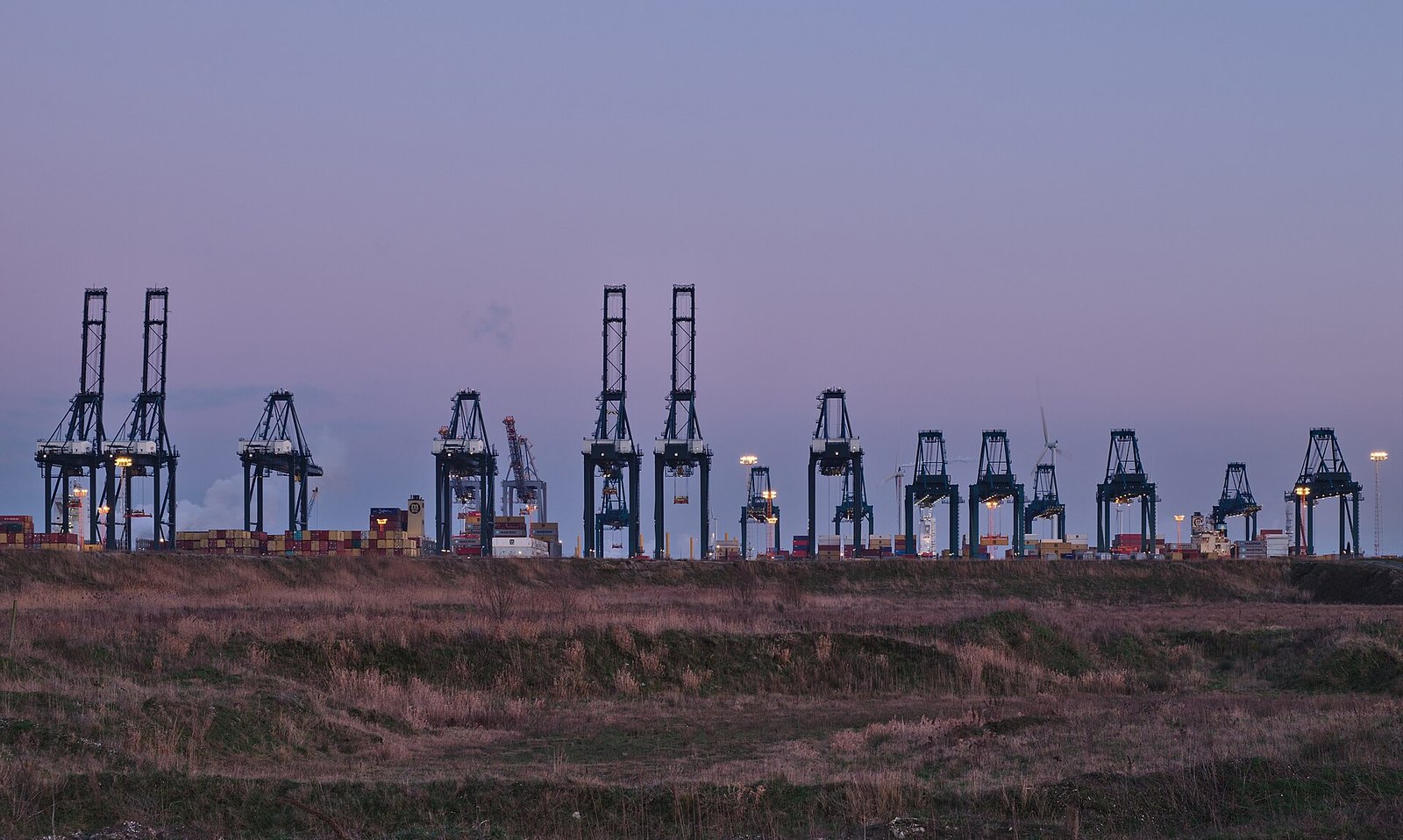
Global trade in goods and services reached a record $35 trillion in 2025, yet most developing countries are finding it harder to share in that expansion, the UN trade and development agency, UNCTAD, said on Friday, 9 October 2026, as it presented its flagship Trade and Development Report 2026: the geoeconomics of development in Geneva.
The report projects that world economic growth will slow to 2.6 per cent in 2026, down from 2.9 per cent last year, even as trade is expected to expand by about 4 per cent at constant prices. Growth in developing economies is forecast to ease to 4 per cent, from 4.7 per cent in 2025. UNCTAD notes that higher trade values this year are being pushed up largely by prices linked to the energy shock from the conflict in the Middle East, which drove Brent crude from $70 to more than $110 a barrel in the weeks after it broke out. The map of world commerce is also being redrawn: trade between China and the United States has fallen by more than 20 per cent since 2024, while East Asia has deepened trade with both China and North America.
Asia remains the main engine of growth and is projected to account for 59 per cent of global expansion this year, with India growing at 7.3 per cent, China at 4.5 per cent and Indonesia at 5.2 per cent. Outside a handful of Asian economies, however, the agency warns that convergence with richer nations has stalled across most of the developing world. Value is shifting into strategic sectors such as semiconductors, artificial intelligence and clean energy, where export controls, investment screening and supply-chain requirements raise the cost of entry. “Value is moving into strategic sectors, semiconductors, artificial intelligence, clean energy, advanced computing, where the barriers to entry are high and rising,” senior UNCTAD official Anastasia Nesvetailova said.
The findings are stark on who captures the gains. Developed economies attract around 70 per cent of the value of announced greenfield projects in high-value strategic sectors, while Africa mines most of the world’s cobalt yet keeps less than 1 per cent of the value in green supply chains. In a case study of an advanced AI server rack, post-tax profits account for 68 per cent of traced value added, while workers receive under 15 per cent. Meanwhile, official development assistance is projected to fall by almost 7 per cent in 2026, its third straight annual decline.
UNCTAD urges developing countries to coordinate industrial, financial and technology policies, link foreign investment to local suppliers, diversify energy supply and deepen regional integration, citing the African Continental Free Trade Area. Acting Secretary-General Pedro Manuel Moreno said rising Global South economies are becoming “regional anchors”, an approach that works best alongside a multilateral trading system that keeps non-discrimination and special and differential treatment at its core.
References
- UNCTAD press release (UNCTAD/PRESS/PR/2026/012) – Trade and Development Report 2026: Global growth slows to 2.6%, and gaps widen between developing regions (9 October 2026)
- UN News – Global trade reaches record $35 trillion despite conflicts (9 October 2026)
- UNCTAD – Trade and Development Report 2026: The geoeconomics of development (full report, PDF)
- Reuters via Business Recorder – World economic growth to slow to 2.6% in 2026, UN trade body says (9 October 2026)